
Criminal Court Cases in Garfield County
Garfield County criminal court cases move through the Ninth Judicial District. District Court hears felonies. County Court hears misdemeanors, traffic matters, and preliminary felony proceedings. The Garfield Combined Court clerk at 109 8th Street, Suite 104, in Glenwood Springs holds those court files. The Associate Court at 200 E. 18th Street, Suite 103, in Rifle provides another County Court route. The live Garfield County courts page lists locations, temporary closures, virtual courtrooms, and bond-hearing links.
Municipal charges remain separate. Rifle, Glenwood Springs, and Carbondale municipal courts hear city-code and eligible lower-level matters. A missing state docket result can therefore mean the matter stayed in municipal court. It does not prove that no court record exists. Court files are also distinct from records held by the independently elected County Clerk and Recorder, whose work concerns land, elections, vehicles, and vital records.
Garfield County Criminal Court Venues
A local venue rule can change which Garfield County counter handles a County Court matter. Under Administrative Order 23-06, new county criminal and civil matters have been divided by the defendant's residence since 2024. Glenwood Springs receives ZIP codes 81601 and 81623. Rifle receives 81647, 81652, 81650, and 81635. That split explains why a Carbondale-area misdemeanor may appear at Glenwood while cases tied to Rifle, New Castle, Silt, or Parachute route west.
Venue does not change the case type. Felony authority still belongs to District Court, and city-code matters still belong to a municipal court. Confirm the location on the live court page before travel because staff meetings and other closures can shorten counter access.
Garfield County Case Record Searches
The Colorado Judicial Branch docket search is the first online channel for state court events. It is a docket index, not a complete download archive. Use an exact case number when possible because a name can match more than one person. After locating the court and case number, request the needed pleading, order, judgment, or certified copy from the Garfield clerk.
- Select Garfield County or the correct court location.
- Enter the case number, or search by party name.
- Narrow the result with first name and dates where available.
- Read event labels, status, location, and scheduled dates.
- Use the Garfield Record/Document Request Form or email GCGWSCourt@judicial.state.co.us for copies.
The official docket interface shows how Garfield County court case searches begin. The image comes from the Colorado Judicial docket page.
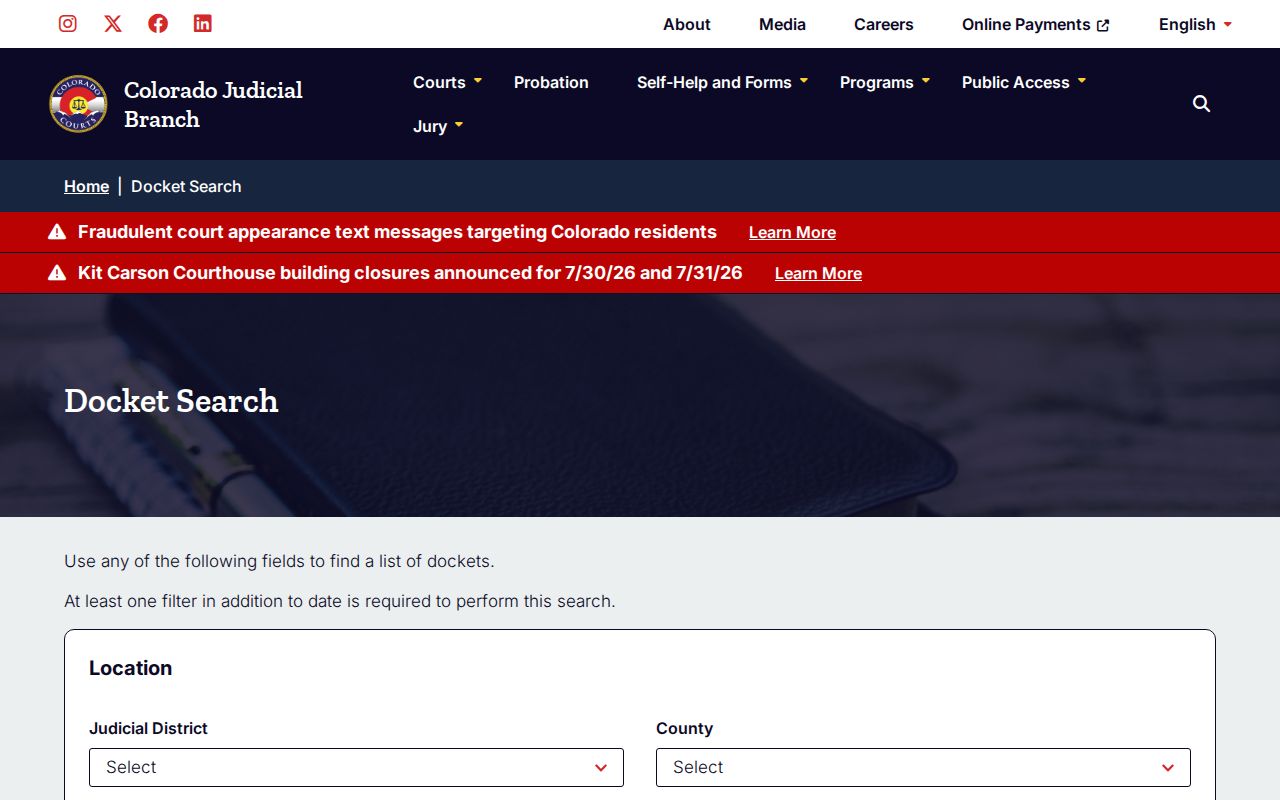
The screen helps identify a case, but the clerk remains the source for the underlying file.
| Field | Type | Required | Use |
|---|---|---|---|
| Court/County | Dropdown | Conditional | Select Garfield and the right location. |
| Case Number | Text | Optional path | Best match when the exact format is known. |
| Party/Last Name | Text | Optional path | May return unrelated people. |
| First Name | Text | No | Narrows a party search. |
| Date Range | Date fields | No | Limits the event period. |
| Search/Clear | Buttons | Yes/No | Runs or resets criteria. |
Garfield County Case Copy Requests
The Garfield search-request form charges $5 per name or case number and allows three to five business days. It asks for the case number and type or charge, full party names, date of birth, approximate file date, requested documents, certification choice, delivery method, and requester contact details. Email delivery is limited to 20 pages and cannot deliver certified records. Hard-file copies cost $0.75 per page, electronic copies $0.25 per page, and certification costs $20 per pleading. Research beyond one hour is prorated at $30 per hour.
The clerk quotes the amount before release. Payment may be made by check or money order by mail, or by cash or card at the office or by phone. The official request screen is shown in an image sourced from the Garfield court document-request page.
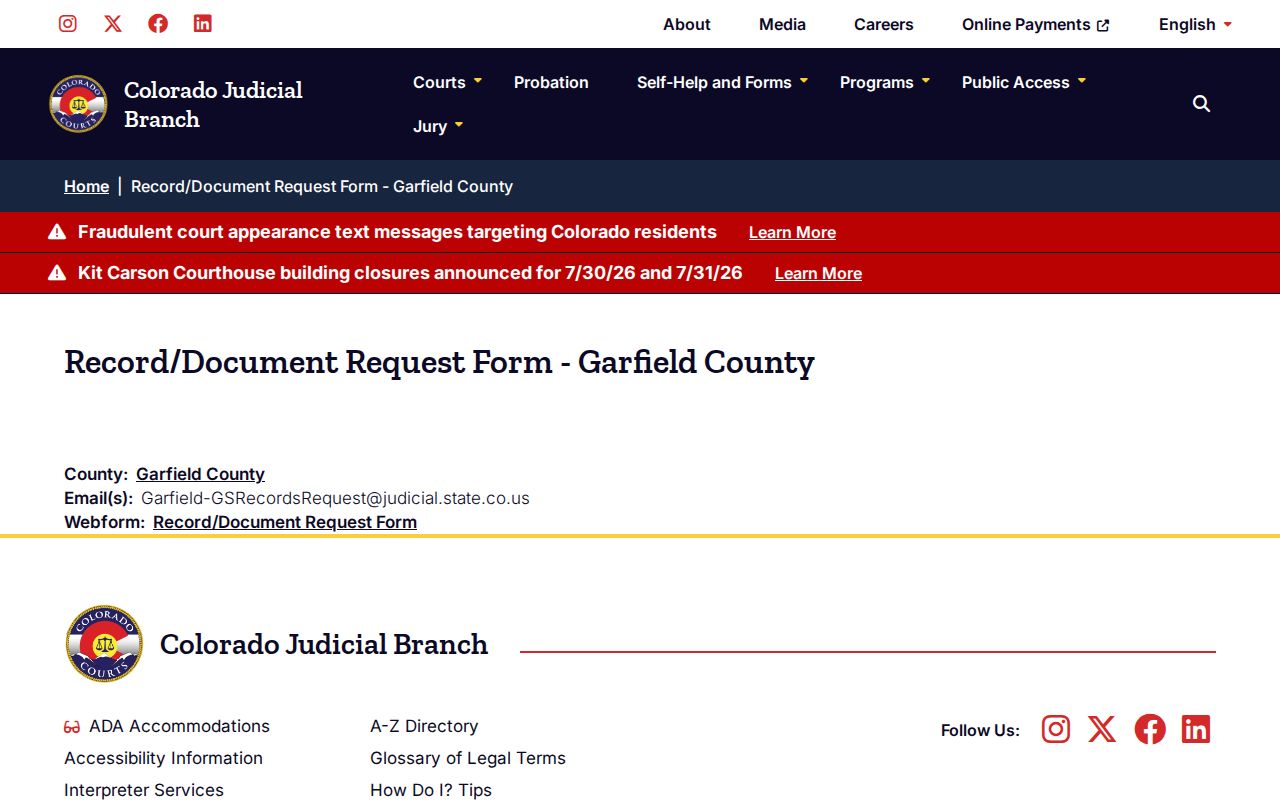
Specific document names and date ranges help the clerk find the correct Garfield County criminal case record.
What a Criminal Case File Contains
A case file records what the prosecutor filed and what the court did. It may include a complaint, information, or indictment; motions; minute orders; plea papers; judgment; sentence; restitution or fees; and warrant returns. The docket is only the chronological index. A police narrative and a jail booking file remain with their creating agencies, so they do not become court documents merely because they concern the same event.
| Case Number and Court | The unique file reference and the District, County, or Municipal Court location. |
|---|---|
| Charging Document | The complaint, information, or indictment stating filed counts. |
| Docket Entries | A dated register of hearings, filings, orders, and case activity. |
| Hearing Dates | Past or scheduled events, sometimes with room or judicial officer. |
| Disposition and Judgment | Dismissal, acquittal, conviction, deferred result, or other outcome by count. |
| Sentence and Conditions | Custody, probation, restitution, fees, and other terms when public. |
Note: A docket label can summarize an event without reproducing the signed order, so request the order before relying on the shorthand.
Garfield County Dockets Versus Rap Sheets
A Garfield County court docket and a CBI criminal history answer different questions. The court file is authoritative for filed counts, hearings, pleas, dismissal, judgment, and sentence in that case. A CBI record organizes fingerprint-supported arrest cycles and dispositions reported by agencies. CBI warns that a record can show an unknown or missing disposition even when the court has already resolved the case.
If a CBI result lacks an outcome, obtain the official court disposition and use CBI's record-challenge or disposition-update process. Do not read an arrest charge as though it were the final filed count. Prosecutors may amend, add, or decline charges after the arrest. For the separate custody and report trail, the Garfield County arrest search explains which agency holds each record.
Criminal Case Stages in Garfield County
A criminal case begins in court when a charge is filed, not merely when police make an arrest. An advisement or arraignment states allegations and rights. Pretrial events can address release, discovery, motions, and negotiations. A plea or trial resolves contested charges. The court then records the disposition and, after a conviction, imposes sentence. Timing varies with the charge, motions, court calendar, and whether the case proceeds to trial.
Case flow: Charges Filed › Arraignment › Pretrial › Plea or Trial › Disposition › Sentencing
- Advisement
- A first appearance explaining rights, allegations, and release issues.
- Disposition
- The outcome of a count, such as dismissal, acquittal, or conviction.
- Deferred judgment
- A plea with judgment delayed while conditions are completed.
- Mittimus
- The written court direction committing a sentenced person to custody.
Federal Cases from Garfield County
Federal crimes arising in Garfield County belong to the U.S. District Court for the District of Colorado, not the Garfield Combined Court. PACER supplies federal dockets and filed documents after registration. Its current fees and quarterly waiver threshold should be checked before searching.
The District of Colorado's official page shows the federal court route for Garfield County cases. The image is linked to the District of Colorado court.
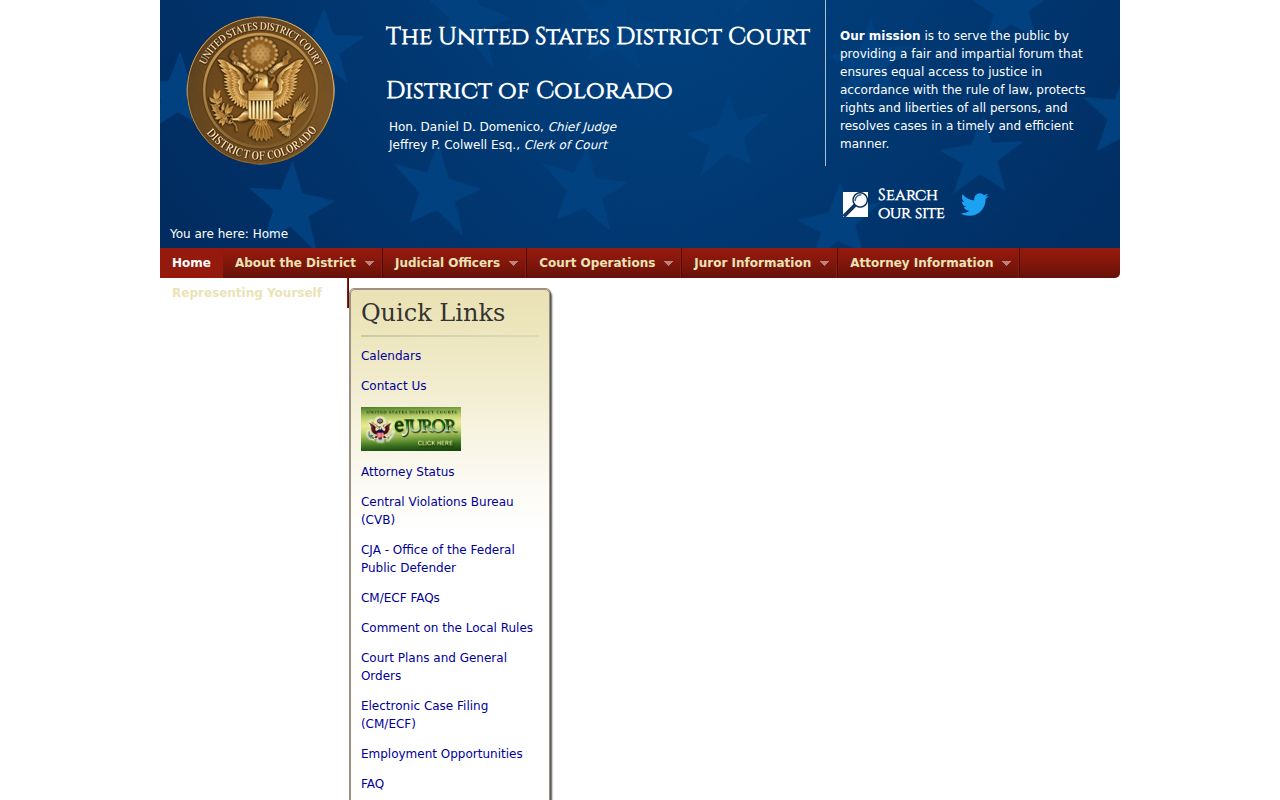
County prosecutors do not hold federal case files.
PACER is the official account and search entry. Its interface appears in an image sourced from PACER.
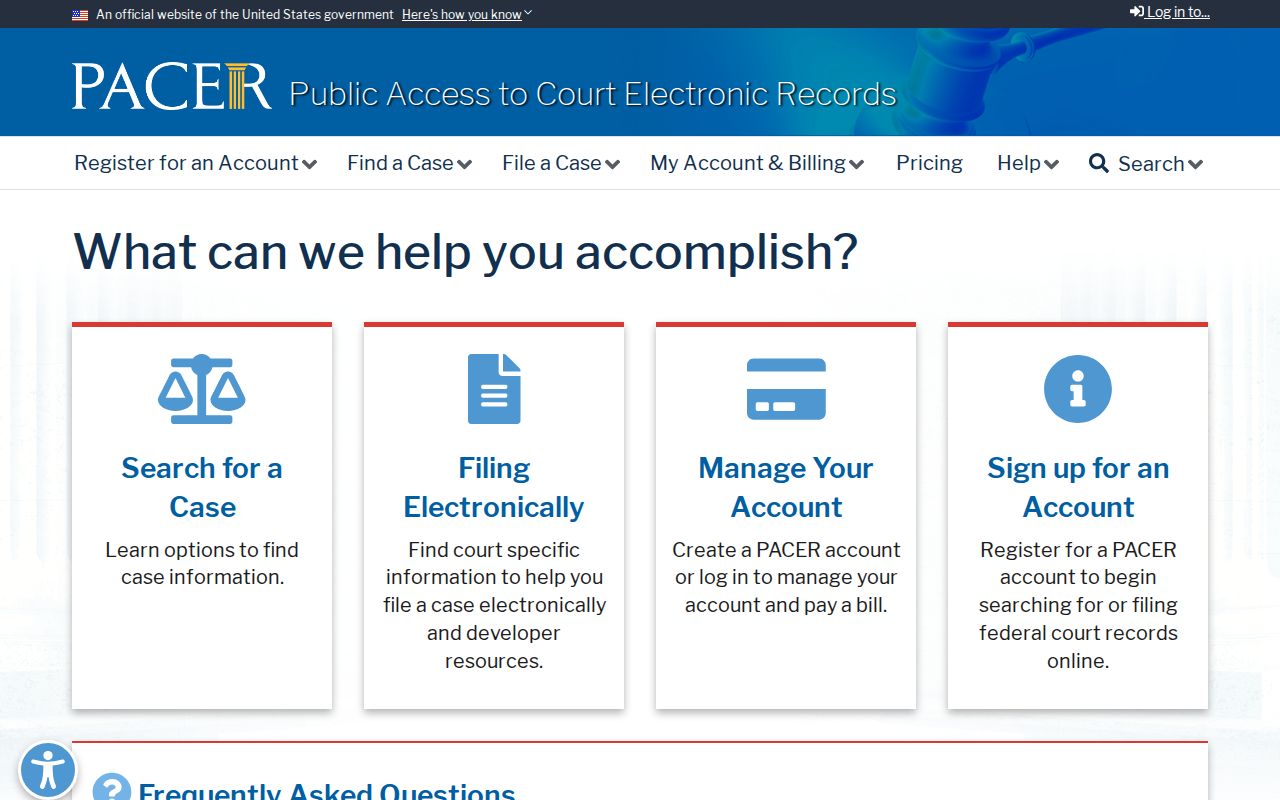
A federal detainee may be housed under contract and may not appear in the Garfield jail report, so the federal docket remains the case source.
Access Rules for Case Records
Colorado court records are generally available under Judicial Branch access rules, but public access has limits. Sealed cases, juvenile records, victim and minor identifiers, Social Security numbers, protected addresses, and nonpublic reports may be withheld or redacted. Online absence can also reflect a municipal venue, older file, data delay, or a search mismatch. Ask the clerk about the file rather than drawing a conclusion from one failed name search.
Police and sheriff records are governed by the Colorado Criminal Justice Records Act, while general county records use CORA. The county's central form specifically warns that sheriff, District Attorney, and other agency records must go to their own custodians. The official Garfield County CORA form is pictured below.
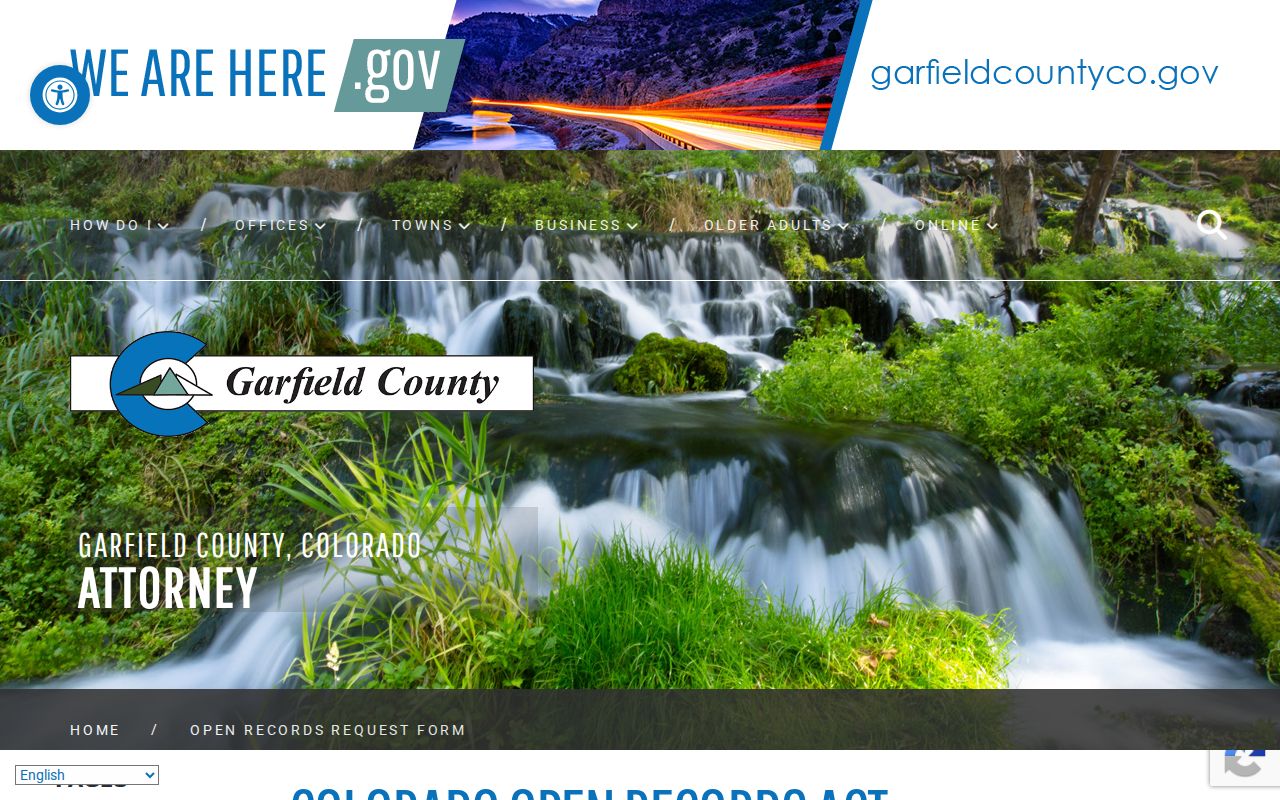
Use that route for covered county administration records, not as a substitute for the criminal court clerk.
Garfield County Municipal Case Fallbacks
When a name or citation does not appear in the state docket, contact the city court that may have handled it. Rifle Municipal Court, Glenwood Springs Municipal Court, and Carbondale Municipal Court have their own clerks and local procedures. No general public name-search portal was identified for those courts. A city citation can therefore require a phone, counter, or written request even when the state docket works well.
Carbondale's official municipal court page illustrates this separate path. The image is sourced from Carbondale Municipal Court.
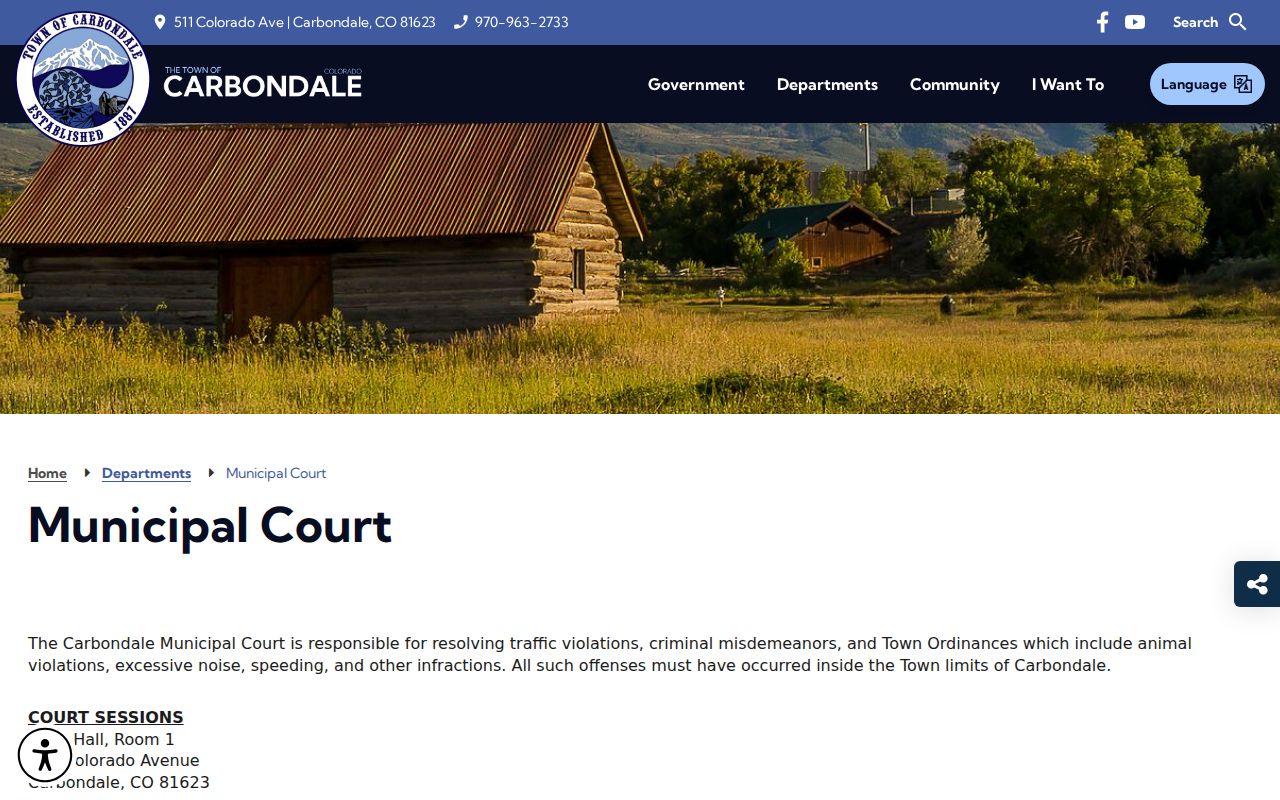
Ask whether the matter is a town ordinance case or a state charge routed to Garfield Combined Court.